Insights
Best AI Receptionist for Veterinary Clinics: What Actually Works on a Real Phone Line
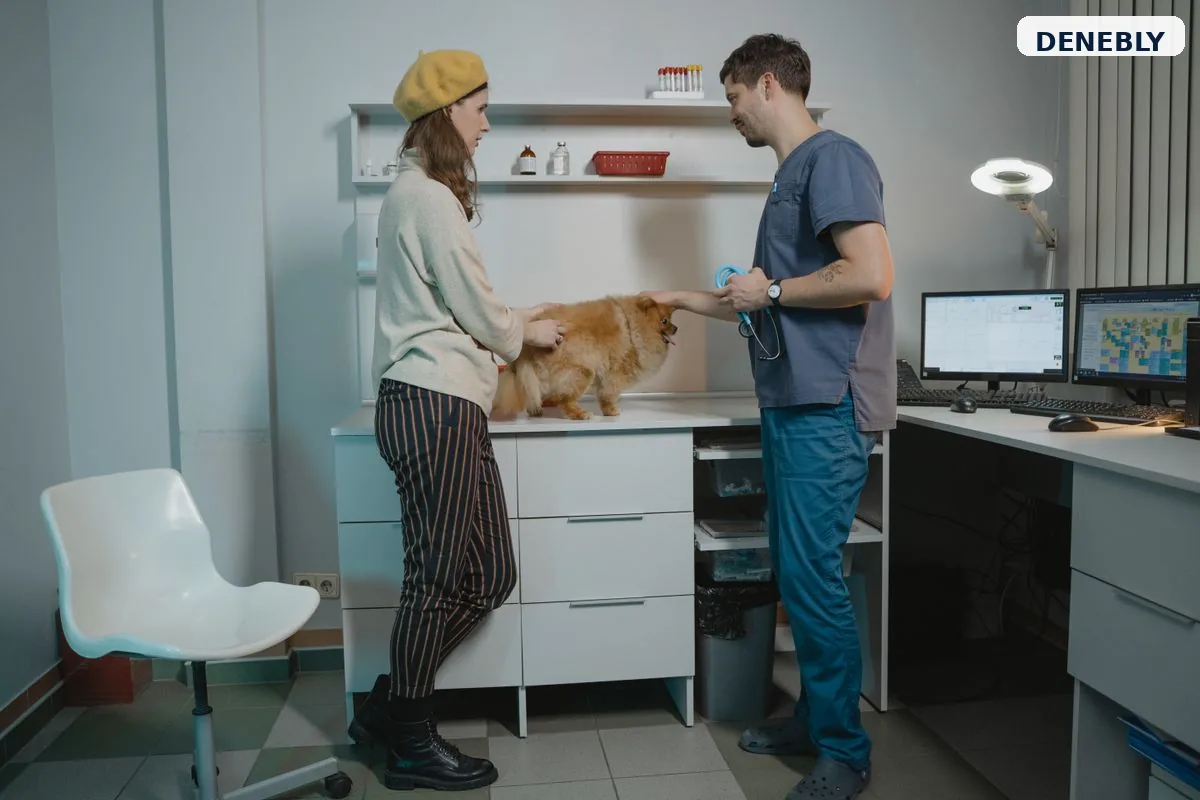
A veterinary clinic phone rings at the worst possible moment. The front desk is checking in a nervous dog, a technician is drawing blood, and the doctor is in the middle of an exam. Somewhere in that picture, a worried owner is calling about a cat that has not eaten in two days. If nobody answers, that owner calls the next clinic, and your clinic loses a visit it never knew it had.
This is the exact problem the best ai receptionist for veterinary clinics is built to solve, and it is also where most generic AI receptionists fail. A vet clinic is not a salon or a law firm with a phone. Its calls mix routine bookings with genuine emergencies, frightened owners, refill requests that need a doctor approval, and species specific scheduling rules. An AI system that treats every call like a booking request is not just unhelpful. In the wrong case, it is unsafe.
The best ai receptionist for veterinary clinics is a voice AI that answers every call, books routine visits into the practice management system, takes refill and records requests for staff approval, and routes urgent symptoms to the on-call veterinarian. It never diagnoses, never prescribes, and never decides that a pet can wait.
Key takeaways:
- Safe routing matters more than smooth booking: the system must sort urgent calls from routine calls first.
- The best ai receptionist for veterinary clinics writes appointments into your practice management system, with the right species, visit type, provider, and appointment length.
- Checked prices in November 2026 run from $29 a month to $499 a month.
- Refills and records are collection jobs, not decisions. The AI gathers the facts and a veterinarian approves.
- Test any system with real emergency scripts before you sign.
If your clinic is losing calls while your team is with patients, the fix is a system that answers in your clinic name, follows your own triage rules, and books into your real diary. Denebly builds conversational AI assistants for clinics that want that setup done properly.
What Is a Veterinary AI Receptionist?
A veterinary AI receptionist is a voice agent that answers your clinic phone, talks with pet owners in natural conversation, and completes the routine work of a front desk. It answers at any hour, handles several callers at once, books appointments, and passes urgent calls to your team with a spoken summary.
The important distinction is between answering and deciding. A good system answers every call and decides nothing clinical. It follows rules your veterinary team wrote in advance: which symptoms count as urgent, which calls go straight to the on-call veterinarian, and what the AI must never say. That is why the best ai receptionist for veterinary clinics is judged on its routing rules before its booking features.
The boundary is what separates a veterinary AI receptionist from a generic one. A generic system is trained to resolve the call. A veterinary system is trained to recognise the calls it must not resolve, and to hand them to a person fast. When an owner says a dog is struggling to breathe, the correct response is an immediate transfer, with the pet details already collected.
An AI receptionist does not replace your front desk. It covers the calls your front desk cannot reach: the overflow at opening time, the lunch hour, the evening, the weekend, and the moments when every member of staff is with a patient. Treat it as a safety net for your people, not as a replacement for them.
Founder voice: the clinics that succeed with an AI receptionist are the ones that wrote their call rules before they switched anything on. One hour spent listing the ten call types you receive most does more than any feature list.
What Makes a Veterinary Clinic Different From Any Other Small Business?
Five differences change what a clinic needs from an AI receptionist, and every one of them is missing from generic comparison guides.
First, emergencies arrive by phone. In most small businesses, an after-hours call can wait until morning. In a veterinary clinic, an after-hours call may be a dog with bloat, a cat with a urinary blockage, or a puppy that ate chocolate. Bloat can become fatal within hours in a large breed dog. The AI must follow the practice emergency protocol and route true emergencies immediately.
Second, booking is species specific. A new puppy wellness check and a dental procedure under anaesthesia need very different slots, rooms, and preparation. An exotic consultation needs a specific veterinarian, a recheck needs the vet who operated, and a vaccination needs a nurse slot. The best ai receptionist for veterinary clinics must match species, visit type, and provider before it offers a time.
Third, callers are emotionally charged. Pet owners calling about a sick or injured animal are often frightened, distressed, or in tears. The AI must handle these calls with empathy and urgency detection, not just neutral efficiency. A brisk tone while an owner describes a seizing dog damages trust even if the routing is correct.
Fourth, the diary is a clinical instrument, not a calendar. A full-time veterinarian in companion and mixed animal practice has roughly 13 to 14 appointment slots available per weekday, according to American Veterinary Medical Association data. Every slot the AI books wrongly is a slot a sick animal cannot use. A calendar shows free time. A practice management system knows the patient and the visit rules.
Fifth, the value of a single client is high. The American Veterinary Medical Association counts 58.9 million dog-owning households in the United States alone, and industry comparisons citing AVMA figures put the average veterinary client lifetime value near $1,800. One missed new client call is a relationship that may never come back.
The 7 Best AI Receptionists for Veterinary Clinics Compared
We compared the systems below on the criteria that matter for vet practices: emergency triage, species specific booking, practice system integration, communication quality, after-hours coverage, pricing transparency, and trial access. Prices are published prices as checked in October and November 2026.
| Tool | Best for | Starting price | Practice system booking | Emergency routing |
|---|---|---|---|---|
| PupPilot | Clinics with mostly clinical calls | $50 a month after hours, $125 per doctor a month full service | Yes, 130 plus systems | Routes to on-call vet |
| Dodo | Emergency and specialty hospitals | Not published | Yes, by species, visit type, and provider | Species and urgency routing |
| AgentZap | After-hours emergency detection | $79 a month | Yes, AVImark, Cornerstone and more | Automatic detection, SMS alert |
| VetRec | Clinics on Vetspire, ezyVet or Cornerstone | $299 a month | Yes, calls, texts, and chat | Routes urgent cases to staff |
| JustCall | Clinics wanting AI plus a full phone system | $99 a month for 100 minutes | Calendar booking, practice system via API | Warm transfers |
| Dialzara | Solo vets testing AI cheaply | $29 a month for 60 minutes | Calendar booking only | Emergency escalation rules |
| PetDesk Phones | Clinics replacing the whole phone system | Custom pricing | Yes, 25 plus systems, pet history on screen | Smart routing, auto SMS |
PupPilot. PupPilot is the only tool here that reads patient medical records in real time during a live call, so a refill question is answered from the chart with the exact drug and dose. It works with more than 130 practice management systems. After-hours cover is $50 a month flat, full service is $125 per doctor per month.
Dodo. Dodo answers every call, 24 hours a day, and routes by species and urgency. It books into your practice management system by species, visit type, and provider, detects emergencies, and alerts your on-call team. It is built for emergency and specialty hospitals. No price is published.
AgentZap. AgentZap is purpose built for pet emergency detection and dispatch. Its AI recognises poisoning, trauma, seizures, bloat, difficulty breathing, and urinary blockage, then sends an SMS alert to your on-call veterinarian at once. Starter is $79 a month for 50 calls, the clinic plan is $199 a month for 150 calls.
VetRec. VetRec answers calls, texts, and chat around the clock and books into Vetspire, ezyVet, Cornerstone, Instinct, and Avimark. It publishes its prices: $299 a month or $499 a month. It suits clinics already running one of those five systems. Verify each claim on a trial with your own system.
JustCall. JustCall combines an AI receptionist with a broader business phone system. Its AI answers 24 hours a day, books into Google Calendar and Outlook, and transfers selected calls to staff. Warm transfers collect the reason for the call first, so a distressed caller does not repeat everything.
Dialzara. Dialzara has one of the lowest published starting prices in this group, and it is the sensible entry point for a solo vet or small clinic testing AI call handling. Business Lite is $29 a month for 60 minutes, and Business Pro is $99 for 220 minutes.
PetDesk Phones. PetDesk Phones is the only full voice over internet phone system on this list built specifically for veterinary practices. It is used by more than 12,000 practices and shows pet history on screen before your team picks up. Pricing is not publicly listed, and setup is a full phone system migration.

Figure 1 shows the six step call flow of the best ai receptionist for veterinary clinics. The value sits in the sorting step.
How Much Does an AI Receptionist for a Vet Clinic Cost?
The first question most clinics ask about the best ai receptionist for veterinary clinics is what it costs. The honest answer is that it depends on what you are buying: message taking, booking, emergency detection, or a whole phone system. Checked published prices in November 2026 fall into four bands, and the right band depends on your call volume.
| Route | Monthly cost | What you get | Watch out |
|---|---|---|---|
| Budget AI receptionist | $29 to $50 | Message taking and basic booking | No practice system booking |
| Mid-range AI receptionist | $79 to $149 | Emergency detection, practice system booking | Call or minute caps |
| Vet specific AI front office | $125 per doctor | Live chart access, outbound reminders | Cost scales with doctors |
| Full phone system plus AI | $249 to $499 | Phones, texting, AI answering in one system | Longer onboarding |
| Live after-hours answering service | $500 to $1,000 | Human answering nights and weekends | No daytime cover |
| Full-time receptionist | About $3,000 | A person, 40 hours a week | No nights or weekends |
The monthly price is the wrong number to compare on its own. The number that matters is price per booked appointment. Take Dialzara Business Lite at $29 a month for 60 minutes. Assume an average call of 3 minutes, so the allowance covers about 20 calls. If half book a visit, you have 10 bookings at about $2.90 per booked appointment.
Watch the billing model as closely as the headline price. Per minute plans punish long calls, and veterinary calls run long, because owners describe symptoms, ask about several pets, and need reassurance. Per call plans punish high volume. Per doctor plans stay predictable as volume grows but rise with headcount.
Two cost traps appear again and again. The first is the setup fee that is not in the headline price: some providers charge a one off setup fee, and some charge for onboarding and script writing. Ask for the total first year cost in writing. The second trap is the connector fee: a cheap looking plan can require a higher tier before it writes into your practice management system.
Against those numbers, set the alternatives. A part-time receptionist at 20 hours a week costs around $1,500 a month. A full-time receptionist costs around $3,000 a month and still leaves nights, weekends, and lunch uncovered. A live after-hours answering service costs $500 to $1,000 a month for nights and weekends only.
Which system should you test first? Let your clinic decide, not a ranking. If your front desk is drowning in routine calls, a budget system that books well may be enough. If your phones are dominated by refill and post-op questions, only a system that reads the chart will remove that work. Our guide to AI answering services for veterinary clinics covers the after-hours case in detail. When you are ready to talk through which band fits your clinic, Denebly conversational AI assistants can map your call types to a system and a rollout plan.
How Do You Choose the Best AI Receptionist for Veterinary Clinics?
Use these eight tests, in this order, to find the best ai receptionist for veterinary clinics for your practice. A system that fails test one should not reach test two, no matter how good its price looks. Run the tests on a trial with real clinic scenarios.
Test 1: the emergency script. Call as an owner whose dog has eaten chocolate, then as an owner whose cat cannot urinate, then as an owner whose dog cannot breathe. The system must state that this is urgent and transfer to the on-call veterinarian, without offering a booking link. If it books a routine slot, reject it.
Test 2: the practice system write. Ask the vendor to demonstrate a live booking into a diary like yours, with your durations and rules. Book a puppy wellness check, a cat dental, and a recheck, and confirm each one lands in the correct slot with the correct provider.
Test 3: the species and visit length test. Give the system three bookings that differ only in species and visit type, and check that it offers different lengths and providers for each. If it offers the same 15 minute slot for all three, it does not understand veterinary scheduling.
Test 4: the multi-pet household. Call about two dogs and a cat in one call, with a different issue for each pet, and ask for separate appointments. The system must capture each pet name and issue separately.
Test 5: the distressed caller. Call in tears about a dog that has collapsed. The system should slow down, acknowledge the distress plainly, collect only the facts it needs, and move fast to a person. A brisk, transactional tone on this call is a fail, even if the routing is correct.
Test 6: the disclosure test. The greeting must say, in plain words, that the caller is speaking with an automated assistant. Clear disclosure builds trust. Check that it is in the greeting itself, not buried in a menu or a website page.
Test 7: the pricing test at your volume. Give the vendor your real call numbers: calls per day, average call length, and share of after-hours and clinical calls. Ask for the total monthly cost at that volume, including overage, connectors, and setup.
Test 8: the reporting test. After a week of trial calls, ask for the record: answered call rate, bookings made, transfers made, after-hours emergencies handled, and a transcript of every call. If the vendor cannot show you what happened on your own calls, you cannot manage the system.
Founder voice: the test that has saved our clients the most money is test two, the live diary write. A page naming your practice system is not proof of a live two-way sync in your version. Run the live test before the contract.
How to Set Up an AI Receptionist in a Veterinary Clinic in 4 Weeks
Setup is not a software task. It is a rules task with a software step at the end. Clinics that skip the rules work end up with a system that answers politely and books wrongly. Follow this four week plan, and do not shorten the shadow week. The best ai receptionist for veterinary clinics is only as good as the rules your team writes for it.
Week 1: write the rules. Sit down with your veterinary team for one hour and list the ten call types you receive most. For each one, decide whether the AI completes it, collects it for staff, or hands it straight to a person. Write the emergency list yourselves, the greeting, and the out-of-hours arrangement.
Week 2: shadow mode. Switch the AI on in listening mode. It hears the calls, drafts the response and the booking it would have made, and your team answers as normal. Review the drafts together each day. You will find wording to fix and at least one call type you forgot.
Week 3: live for routine calls only. Switch the AI on for routine calls: hours, directions, wellness bookings, vaccine bookings, and refill intake. Keep urgent calls, complaints, billing disputes, post-op worries, and end-of-life calls on human answering.
Week 4: review and expand. Look at the month of data: answered call rate, bookings made, transfers made, after-hours emergencies handled, and the time your front desk recovered. Decide whether to expand the AI scope or tighten it.
| AI completes | AI collects and hands off | Staff handle only |
|---|---|---|
| Hours, address, directions, parking | Prescription refill requests | Medical advice and diagnosis |
| Routine wellness and vaccine booking | Medical records requests | Medication changes |
| Confirmations and reminders | Sick-pet details | Treatment recommendations |
| New client intake | Complex appointment requests | End-of-life discussions |
| Approved price ranges | Complaints and payment disputes | Post-operative complications |
| Sending forms and links | Insurance questions | Anything the AI has failed once |
Print the routing table above for the front desk. It is also the test for every vendor demo: ask the vendor to show you how each row is configured. If a vendor cannot configure the middle column, the system is too blunt for a clinic.
When the rules are written and the shadow week is done, the technical setup is short. Most systems go live in days: connect the phone number by call forwarding, connect the calendar or practice system, load your services, fees, hours, and policies, record the greeting, and set the transfer numbers.
If you would rather have the rules, the scripts, and the rollout handled by a team that has done it for clinics before, Denebly can take that on as a project. Our AI chatbot development service covers the same booking and triage patterns on web chat and messaging. The booking flow we built is described in our AI chatbot for veterinary clinics guide.
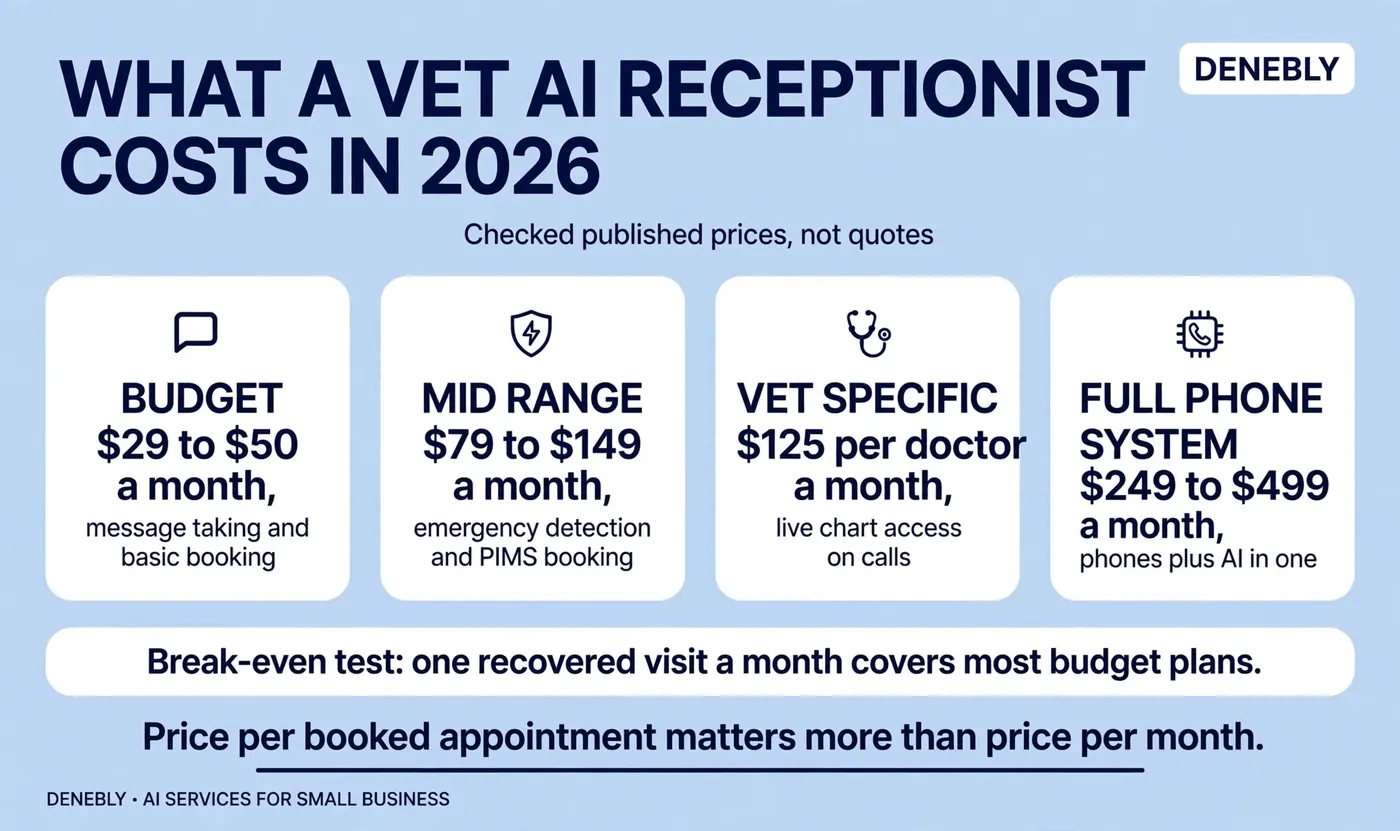
Figure 2 shows the four price bands from checked published prices. One recovered visit a month covers most budget plans. The figure is a snapshot, not a quote.
Mistakes Veterinary Clinics Make With AI Receptionists
Mistake 1: letting the AI diagnose. An AI that tells an owner a limp can wait until morning has made a clinical judgement it is not qualified to make. The fix is a hard rule: the AI describes no symptoms and recommends no home treatment.
Mistake 2: buying on monthly price alone. A $29 plan that cannot write into your practice system will cost you more in staff time than a $149 plan that can. Compare price per booked appointment, not price per month.
Mistake 3: skipping the live practice system test. A vendor page that names your system is a claim, not a proof. Run the live diary write test before you sign, and get the result in writing.
Mistake 4: hiding that callers are speaking to AI. Some clinics ask the vendor to make the AI sound fully human and never disclose itself. Owners who discover they were misled lose trust. Say it plainly in the greeting.
Mistake 5: no after-hours rule. Clinics configure the daytime flow carefully and leave after-hours as a voicemail box. After-hours calls are disproportionately urgent, and a caller who reaches voicemail will call the next clinic.
Mistake 6: never reviewing transcripts. Scripts drift, fees change, and the system keeps answering with old information unless someone updates it. Review transcripts weekly for the first month, then monthly.
Readiness Checklist Before You Buy
Run through this checklist with your team before you sign any contract. If you cannot tick every box, fix the gap first. Each item prevents a class of failure, and the list is the fastest way to tell whether a clinic is ready for the best ai receptionist for veterinary clinics.
- Your ten most common call types are listed, with a routing decision for each one.
- Your emergency list is written by your veterinary team, with the transfer number and backup route.
- Your out-of-hours arrangement is written in full.
- Your practice management system is named, and the vendor has demonstrated a live booking.
- Your fee ranges are written down, with a clear mark on what the AI may quote.
- Your greeting discloses the AI in plain words.
- Your refill rule is written: facts collected by AI, approval by a veterinarian only.
- Your pricing is calculated at your real call volume, as price per booked appointment.
- Your trial includes the three emergency scripts, the multi-pet test, and the distressed caller test.
- One named person on your team reviews transcripts weekly for the first month.
Clinics that arrive at a vendor with this checklist done get better answers, faster trials, and fewer surprises, because the trial will be judged on real work.
Conclusion: Start With Routing, Not With Price
The best ai receptionist for veterinary clinics is not the cheapest system, and it is not the system with the longest feature list. It is the system that sorts a frightened owner from a routine booking in the first thirty seconds, writes the routine visit into the right slot in your real diary, and gets the urgent call to a veterinarian with the facts already collected.
Start with the rules. Write your call types, your emergency list, and your out-of-hours arrangement with your own team. Run the eight tests on a trial, with the emergency scripts first, and measure price per booked appointment on your own numbers.
If you want help writing the rules, running the tests, or building the system itself, talk to Denebly. We build conversational AI assistants for clinics that want the front desk covered safely. To discuss your clinic, visit our contact page or write to sales@denebly.com or call +1 (214) 896-2906.
Frequently Asked Questions
What is the best ai receptionist for veterinary clinics?
The best ai receptionist for veterinary clinics is the system that routes emergencies to a veterinarian first, books routine visits into your practice management system with the right species, visit type, and provider, and takes refill and records requests for staff approval.
Can an AI receptionist book veterinary appointments?
Yes, when it has access to the correct schedule. A system with a practice management system integration books wellness visits, vaccines, sick-pet appointments, and rechecks into real diary slots with the right length and provider.
Can AI handle pet emergencies?
AI can recognise urgent language, collect the pet details, and transfer the call to the on-call veterinarian or give the emergency hospital details at once. It cannot diagnose, assess severity, or decide that a pet can wait.
How much does an AI receptionist for a vet clinic cost?
At published prices checked in October and November 2026, budget plans start at $29 a month, mid-range plans with emergency detection and practice system booking run $79 to $149 a month, vet specific systems cost $125 per doctor a month, and full phone systems with AI run $249 to $499 a month.
Will pet owners know they are talking to AI?
They should, because the greeting must say so in plain words. Clear disclosure builds trust. Most owners care about getting help fast, and an AI that answers in seconds is preferable to voicemail.
Does an AI receptionist work with Cornerstone, AVImark or ezyVet?
Some do and some do not, and the difference is depth. Vet specific systems such as PupPilot, Dodo, VetRec, and AgentZap list these systems and describe direct booking into them. General systems usually connect through a calendar, an API, or Zapier.
Can AI handle medication refills for pets?
AI can collect the refill request, including the pet name, medication name, dose, and preferred pickup date, and pass it to your team. It must never approve a refill, change a dose, or dispense anything itself.
How long does it take to set up an AI receptionist for a vet clinic?
The software side takes days: connect the phone number, connect the calendar or practice system, load your services and fees, and record the greeting. The real work is the rules document, the fee guide, and the escalation wording.
Sources
American Veterinary Medical Association, US Pet Ownership Statistics, which supports the 58.9 million US dog-owning households figure and the appointment slot data cited here.
Royal College of Veterinary Surgeons, supporting guidance on emergency and 24-hour cover, which supports the duty to provide 24-hour emergency first aid and pain relief and to give clients full details of emergency cover.
Vendor prices in this guide are published prices from the vendors own pages, as re-checked by the comparison guides read for this article in October and November 2026. They are checked snapshots, not quotes.

WRITTEN BY
Arslan Mushtaq
Founder, Denebly
Arslan founded Denebly in 2018 and leads its AI development work for startups and mid-size businesses, across AI chatbots, agentic workflows, RAG systems, machine learning and automation. Denebly has delivered 100+ projects from Dallas, Texas.
Ready to Solve Your Business Problems With AI?
Tell us what you are trying to build, automate or fix. You will get an honest assessment within one business day, not a sales pitch.